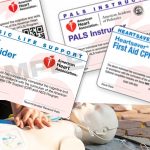
Is it time for your initial BLS certification or a renewal course? Now, you have more options for pursuing BLS certification than ever before. Whether you choose conventional instructor-led training (ILT) courses or the newer blended learning model that uses resuscitation quality improvement (RQI), you can find the certification course that works the best for you.
The critical life-saving skills you learn during BLS courses can have a profound impact on your level of patient care during emergencies. The ability to respond quickly and provide high-quality CPR makes the difference between life and death for your patients. By choosing the BLS certification course that meets your needs and fits your schedule, you can get the training you need to significantly improve patient outcomes.
RQI BLS vs. Conventional BLS Training: Breaking it Down
What is RQI Training?
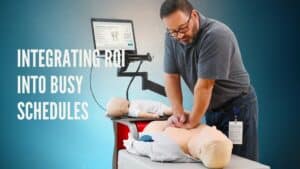
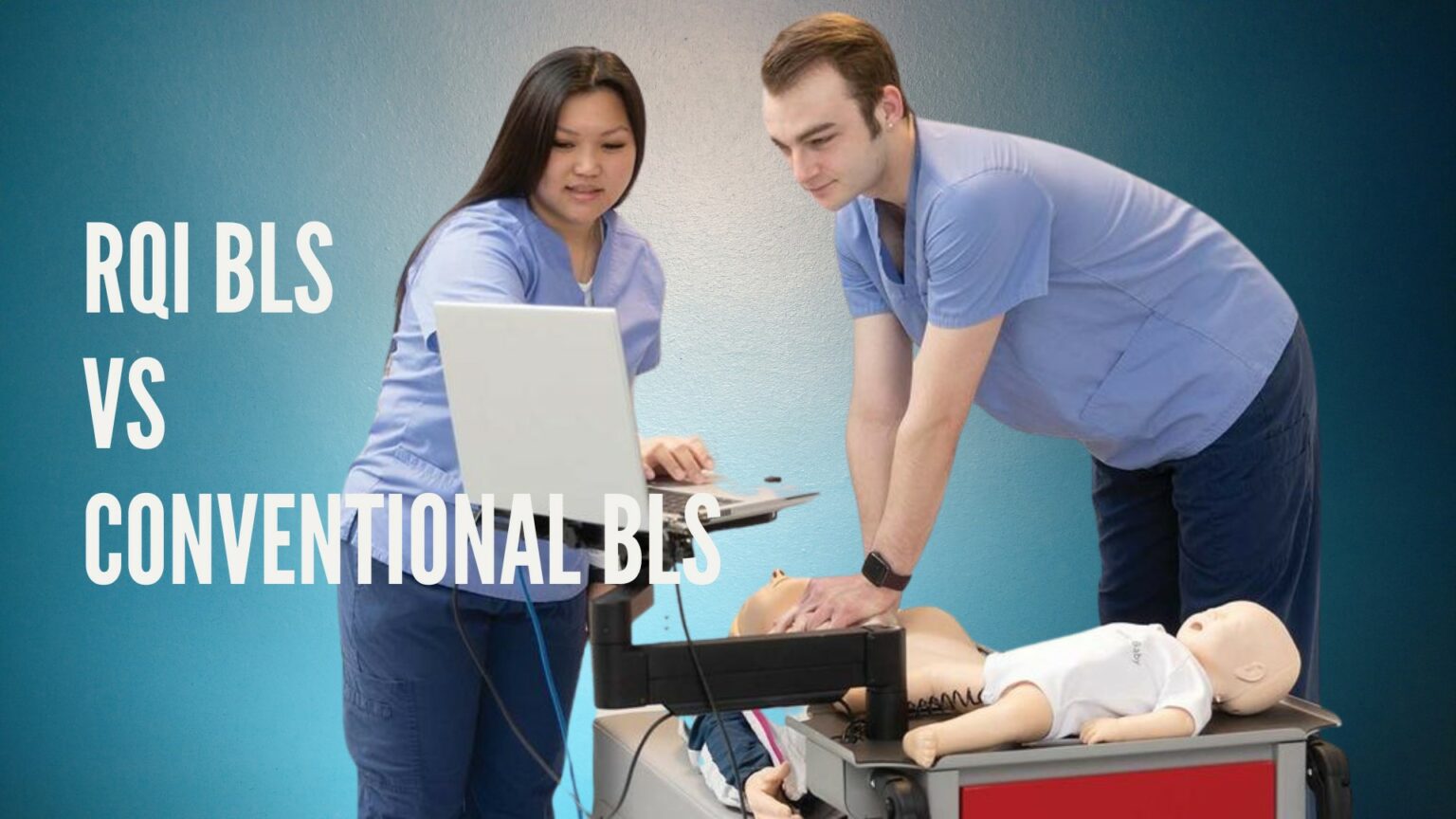
The RQI program offers a new approach to CPR skills practice. Using advanced technology and simulation stations, participants receive immediate feedback on their resuscitation skills. Specific skills assessed include compression depth and rate, hand placement, compression-to-ventilation ratio, and ventilation volume. This allows learners to make adjustments during the skills check and see what high-quality CPR skills look and feel like.
RQI training is incorporated into HeartCode® Complete, a blended-learning curriculum from the American Heart Association (AHA) that features both online learning and skills checks using the RQI simulation station. The eLearning portion of the training is completed on the participants own schedule and can be customized to the knowledge and skills the participant already has. The course also includes a system of checks and balances to ensure participants are comprehending and retaining the information learned. Read more on What is RQI article.
What is ITL Training?
ITL training is the conventional method of BLS certification training. This course takes place in a traditional classroom and skills checks are led by the instructor. The instructor provides feedback and coaching during the session to ensure participants are delivering high-quality CPR.
Both RQI and ITL training take a few hours to complete. An ITL course is typically done in a single session. You can also select a hybrid model of this training that includes an online portion and an office skills check with an instructor present. Once the training is completed, you receive your certification. ITL training can be more of a one-and-done approach to the certification you need.
Both ITL and RQI training lead to certification, which lasts two years.
Pros and Cons of RQI vs. Conventional BLS Training
When it comes to BLS courses, no one method is necessarily superior to another. Both the ITL and the RQI program offer the knowledge and skills you need to respond to patient emergencies. Choosing the right program that fits with your specific needs, learning style, and schedule will optimize your training success. Understanding the differences between the programs will help you select the right program for you.
Course Instruction: In Person or Online?
One primary difference between conventional BLS training and the RQI program included with the HeartCode® curriculum is how the material is delivered. Conventional training classes are taught by a live instructor in a classroom setting. Participants have the benefit of asking questions during the course to understand or clarify the content. There is also the advantage of taking the course with coworkers, allowing you to hone your team resuscitation skills together.
HeartCode® Complete uses an eLearning model that delivers course content online. Participants can tailor the material to their specific needs, based on their current knowledge and skill level. The course can easily be worked around the participant’s schedule and checks along the way ensure participants have a thorough understanding of the content taught.
Various techniques are used to adapt to different learning styles and participants can work at their own pace. This is also an adaptive test, meaning the more questions you answer correctly, the shorter the test. Conversely, the more you miss, the more questions you’ll need to answer to prove your knowledge of the subject.
Skills Check: Instructor or Simulation Station?
The skills check is another key difference between the two types of training. Conventional BLS certification features instructor-led skills check, with a live instructor offering feedback, coaching and assessments. This is another opportunity to ask clarifying questions of an experienced instructor to hone your resuscitation skills.
The simulation stations used for the RQI program feature advanced technology that provides video and audio feedback in real time. Participants can adjust their resuscitation techniques during the skills check, with greater precision than they might receive from an instructor. RQI has been shown in some studies to improve the quality of CPR, which can also improve patient outcomes.
Flexibility: On Your Time or One-and-Done?
The advantage to having more than one option for your BLS certification is that you can fit your training into your schedule no matter what your schedule might be. For some healthcare professionals, the one-and-done approach offered by conventional BLS training works better because it allows them to take a single day off to complete the entire certification process.
Others prefer to fit their training into their daily routine in smaller snippets. In this case, the HeartCode® Complete program featuring RQI training may be a better option. The majority of the coursework can be done through the eLearning framework, with a scheduled skills check using an RQI simulation station.
Choose Your BLS Training at SureFire CPR
SureFire CPR offers both conventional BLS certification and RQI certification, using the HeartCode® Complete program. Both courses are $89. Our instructors are all professionals who have experience both in the field and in the classroom. We make training interesting and fun so you can focus on the content and retain your knowledge and skills long afterward.
To learn more about RQI, check out our resource hub. To get more information about our certification courses, including our current class schedule, check our website or contact a member of our team today.