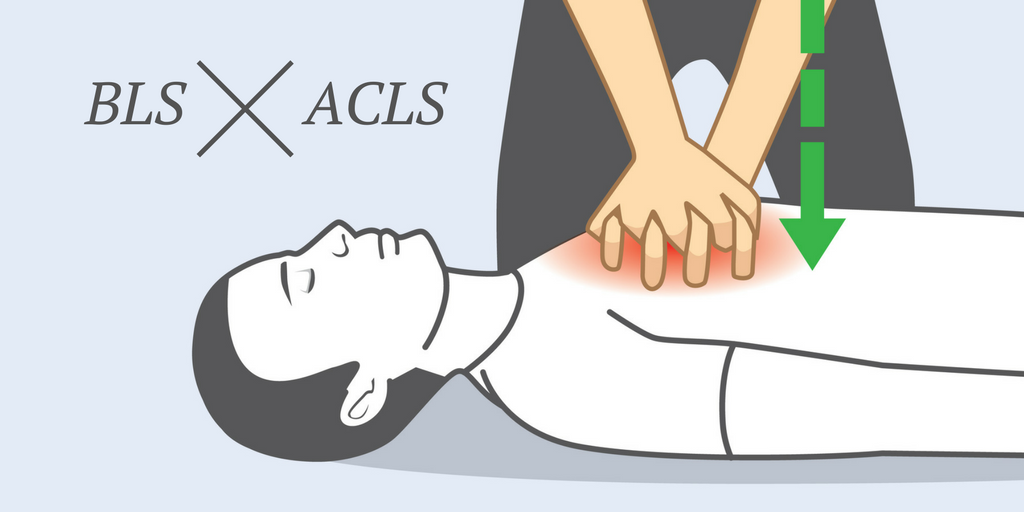
Today’s post will address one of the most common questions asked by first aid students: What’s the difference between basic life support (BLS) and advanced cardiac life support (ACLS) training programs?
When it comes to BLS and ACLS training programs, there are many factors to consider. Now, let’s examine both BLS and ACLS training programs, along with the differences between them.
What Is BLS?
All healthcare providers are trained in BLS. And it’s just that – the basic first steps in stabilizing a patient. The primary goal of the responder is to stabilize the patient until he or she can be addressed by a first responder or taken to a hospital for further treatment.
BLS can be conducted without drugs, invasive procedures or medical equipment. As such, it consists of techniques like cardiopulmonary resuscitation (CPR) oropening a patient’s airway via the “head tilt” technique.
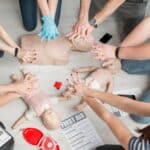
A BLS class is intended for nurses, medical assistants, doctors, EMTs, dentists, pharmacists and other medical personnel. It usually requires about 3.5 hours to complete and covers the following topics:
- Administration of adult, child and infant CPR
- Support for conscious and unconscious choking victims of all ages
- Automated external defibrillators (AEDs) and how they are used in emergencies
- The importance of breathing barriers, bag valve masks and two-rescuer CPR
- Cardiopulmonary emergencies and special resuscitation scenarios
After a student finishes a BLS class, he or she will receive a BLS certification card. This card verifies successful completion of a BLS class and will stay active for two years.
What Is ACLS?
ACLS, as you can imagine, involves sophisticated techniques and procedures like initiating IV access, reading and deciphering electrocardiograms and administering emergency drugs.
During an ACLS class, students will learn about the following topics:
- Recognition and management of respiratory issues and cardiac arrest
- The importance of effective airway management
- ACLS pharmacology terms and definitions
- How to manage acute coronary syndromes and stroke
- How to serve as both a leader and team member in a resuscitation team
ACLS training is ideal for medical personnel who will need to respond to cardiovascular emergencies. BLS is a pre-requisite for ACLS training as ACLS features a BLS review. The course requires about 12 hours to complete.
Which Should You Choose: BLS or BLS and ACLS Training?
Most employers will indicate if BLS training is needed or if both BLS and ACLS Training is required. All medical professionals are required to take BLS.
Comparatively, ACLS training is essential for healthcare professionals who treat patients during serious medical emergencies. This training assumes a medical professional can access advanced equipment that is available at a clinic or hospital. An ACLS course also goes beyond “basic” emergency topics, and as a result, requires more time to complete than a BLS class.
SureFire CPR offers BLS and ACLS training in Orange County that rigorously adheres to AHA guidelines and will ensure first responders take their life-saving skills to the next level. Our BLS and ACLS classes feature:
- World-Class Instructors: We understand that only the best instructors will suffice for BLS and ACLS training. Therefore, we employ firefighters, paramedics, EMTs and other medical personnel to teach you about BLS and ACLS.
- Interactive Lessons: We provide a combination of comprehensive hands-on and classroom lessons so you can enjoy an interactive learning experience.
- Powerful Insights: We make it easy to receive real-world insights into BLS and ACLS topics. Plus, if you ever have BLS or ACLS questions, we’re happy to provide expert responses to your queries at any time.
Ready to earn your BLS or ACLS certification? Enroll in BLS or ACLS training from SureFire CPR, and you can gain life-saving skills.
To find out more about our BLS and ACLS courses, please contact us today at (888) 277-3143.