Why Pediatric Emergency Training Matters
When an infant or child struggles to breathe, turns pale, or suddenly can’t respond, the room changes. Every second carries weight, and the people around that child look to you. Pediatric emergency training doesn’t remove the pressure, but it gives you a clear plan for what to assess, what to do first, and how to care for a small patient with confidence.
In life support training, pediatric patients include infants, children, and adolescents up to age 18, excluding newborns. That’s a wide range of body sizes, airways, and physiological responses, which is exactly why pediatric emergencies call for specific preparation.
Two American Heart Association courses focus on this type of situation: Pediatric Advanced Life Support (PALS) and Pediatric Emergency Assessment, Recognition, and Stabilization (PEARS). They are distinct courses with different purposes, not two versions of the same class.
The right choice for you depends on your clinical role, the responsibilities you’re expected to carry during a pediatric emergency, your current BLS preparation, your employer’s requirements, and your budget. At SureFire CPR, we help raise responders who are ready for these moments, and that starts with choosing the training that matches the work you actually do.
PALS vs. PEARS: Choose the Level of Pediatric Support Your Role Requires
| Course | Best Fit | Primary Focus | Clinical Responsibility Level | BLS Preparation |
|---|---|---|---|---|
| PALS | Advanced-care professionals such as doctors, nurses, and surgical nurses | Advanced life-support methods, pediatric assessment, respiratory emergencies, vascular access, and resuscitation team leadership | Leading or functioning as a member of a pediatric resuscitation team | Current BLS certification required |
| PEARS | Professionals who encounter pediatric emergencies more often in the field, including EMTs, paramedics, firefighters, and school nurses | Recognition, assessment, initial management, and stabilization of young patients | Contributing to care rather than leading a pediatric resuscitation team | – |
Neither course is universally “better.” The right one is the one that fits your role. Here’s the core distinction at a glance:
What PALS Prepares You to Do
PALS is designed for healthcare providers who may treat infants and children in serious emergencies. The course covers pediatric assessment, management of pediatric respiratory emergencies, vascular access, and related advanced support skills.
The defining feature of PALS is its emphasis on advanced life-support methods and pediatric resuscitation team leadership. If you’re expected to direct care when a child deteriorates, PALS is the preparation built for that responsibility. Review the full PALS course details to see how the course is structured.
What PEARS Prepares You to Do
PEARS teaches healthcare professionals how to evaluate and stabilize young patients in emergencies. Its focus is on recognizing when a child is in trouble, assessing the situation, starting initial management, and supporting the care team until advanced help takes over.
PEARS is valuable training, but it is not a substitute for PALS team-leadership preparation. If your role requires you to lead a pediatric resuscitation, PEARS alone won’t cover that expectation.
Which Pediatric Life Support Course Is Right for You?
Most learners need one course, not both. Base your decision on your day-to-day responsibilities:
If you work in an advanced-care role where you may lead or manage a pediatric resuscitation, choose PALS. If you’re more likely to recognize a pediatric emergency, begin stabilization, and support the team, PEARS may be the better fit.
Still unsure? Confirm with your employer before enrolling. For a deeper side-by-side breakdown, read our guide on differentiating between PALS and PEARS classes.
PALS Requirements, Course Content, and Completion Path
Start With Current BLS Preparation
You must hold a current BLS certification before taking PALS. This prerequisite also applies to ACLS. Before you look at schedules or pricing, check your BLS status. If it’s expired or close to expiring, take care of that first so nothing delays your PALS enrollment. You can find prerequisite details on our help page.
What You Will Learn in PALS
PALS coverage can include:
- A systematic approach to pediatric assessment
- Management of pediatric respiratory emergencies
- Vascular access, including intraosseous training
- Airway management
- Pharmacology
- BLS review
- Pediatric case studies and simulations
- Functioning as a leader or team member during pediatric resuscitation
You can see an example of this course content on our Orange, CA location page.
Complete Training Around Your Schedule
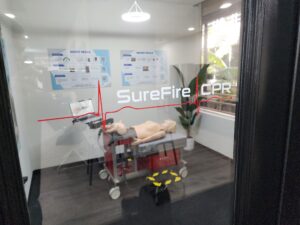
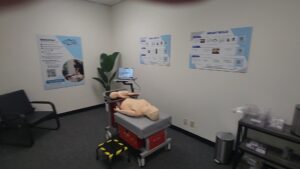
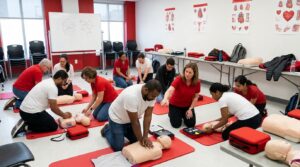
SureFire CPR’s standard pathway is a hybrid format: self-paced online learning completed at home, followed by a hands-on skills session at a Skills Lab. You move through the knowledge portion when it works for you, then demonstrate your skills in person so your readiness is practical, not just theoretical.
Our CPR Verification Station is an American Heart Association-approved automated training platform for obtaining or renewing BLS, ACLS, PALS, and Heartsaver training, giving you a flexible way to complete hands-on CPR skills verification.
Once you finish, you receive your AHA PALS Provider eCard the same day, valid for two years. That means life-saving skills earned on your schedule, with the hands-on component that prepares you to act.
Pediatric Life Support Certification Price Comparison
SureFire CPR PALS Pricing
If you’re running a pediatric life support certification price comparison, start with what’s published. SureFire CPR lists Pediatric Advanced Life Support (PALS) at $255.00. Prices can vary by location, so confirm current pricing for the location you plan to book.
SureFire CPR also lists a separate certification-only PALS skills test at $124 on shop.surefirecpr.com. This is a skills-test offering, not a replacement for the full course pathway that initial PALS learners need.
How SureFire CPR Compares With Published PALS Prices
Other providers publish PALS prices as well. Each offering may differ in format, region, and what’s included:
| Provider | PALS Offering Compared | Published Price | Format or Inclusion Detail | Comparison Consideration |
|---|---|---|---|---|
| SureFire CPR | PALS course | $255 | Online learning at home plus hands-on skills session at a Skills Lab | Confirm your location’s price |
| SureFire CPR | PALS skills test (certification-only) | $124 | Skills test only | Separate offering; not equivalent to the full PALS course |
| PASS Learning Center | PALS Initial | $235 | – | Initial course; check format and geographic availability |
| Criticare Medical Institute | Blended PALS | $289 | Blended format | Confirm what the price covers and where skills sessions are offered |
| GEAR UP with CPR | PALS Provider Initial | $280 | – | Initial course; check format and geographic availability |
What to Check Before Choosing the Lowest Price
A lower number doesn’t always mean a lower total cost. Before you book, compare:
- Course type: Is it initial training, renewal, or skills-only?
- Inclusions: Are both the online learning and the skills session included?
- Completion pathway: How and when will you receive your AHA PALS Provider eCard?
- Availability: Does the provider have a location you can actually reach?
If you’re considering PEARS, verify the current course price and format directly before booking, since pricing can vary by location and format.
Plan Your PALS or PEARS Renewal and Next Steps
Keep Your Pediatric Life Support Training Current
SureFire CPR offers renewal options for BLS, ACLS, and PALS that combine online components with on-site skills checks, so staying current fits into a busy schedule.
Timing matters. If your PALS status lapses, you’ll need to enroll in an initial PALS class rather than a renewal course. Plan your renewal before your eCard expires to keep the shorter path available.
Enroll With the Course That Matches Your Responsibilities
Here’s the decision in brief:
- Choose PALS if your role includes advanced pediatric emergency responsibilities and team-leadership expectations.
- Choose PEARS if your role centers on recognition, initial stabilization, and supporting the care team.
- Confirm with your employer before enrolling if you’re unsure.
If PALS is your path, make sure your BLS is current first. Then pick your course and schedule your training. Choose the Right Course and take the next step from uncertainty toward prepared, confident action when a child needs you most.
Frequently Asked Questions About PALS and PEARS
What happens if my PALS status has expired?
If your PALS status has lapsed, you’ll need to enroll in an initial PALS class instead of a renewal course. Before you sign up, also check your BLS status, since current BLS certification is required to take PALS. If both have expired, renew BLS first so your PALS enrollment isn’t delayed.
What pediatric course should non-healthcare child caregivers take instead of PALS or PEARS?
PALS and PEARS are designed for healthcare professionals, so parents, babysitters, coaches, and other non-clinical caregivers are usually better served by a layperson course such as CPR, AED, and First Aid or Heartsaver training. If a childcare employer or organization requires a specific course, ask them for the exact course name before you enroll so your training meets their requirement.